
Geometric Pool Features That Add Visual Interest
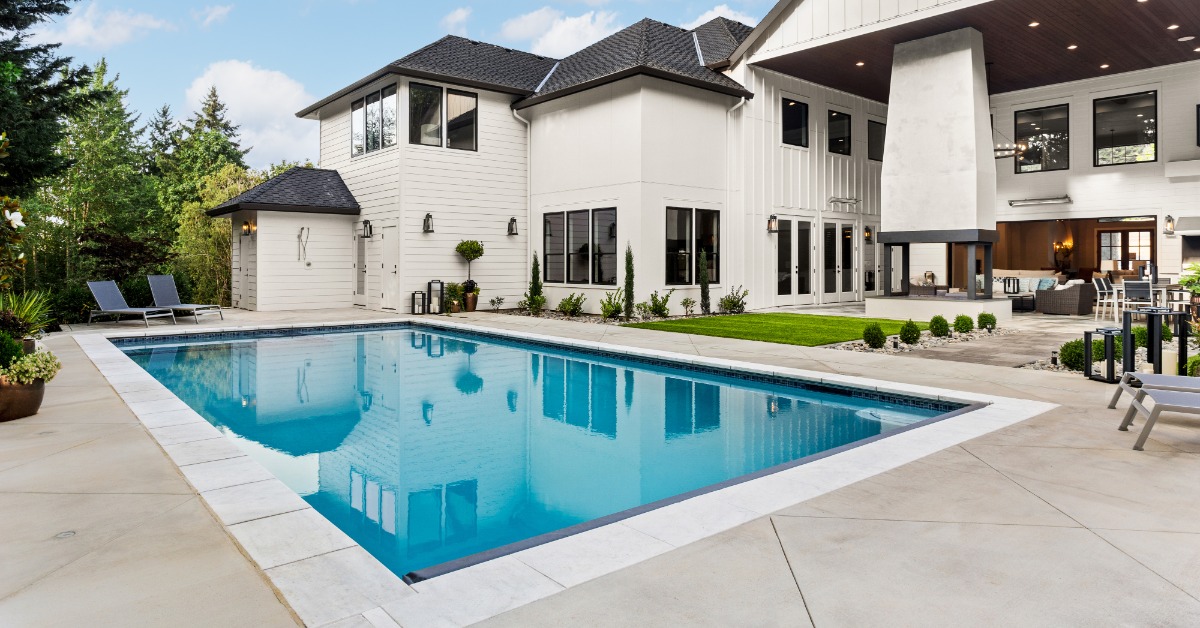
A geometric swimming pool brings structure and sophistication to an outdoor space through clean lines and carefully planned details. Unlike freeform designs, geometric pools rely on defined angles and balanced proportions to create a polished appearance. Homeowners can enhance these designs with features that introduce contrast, movement, and architectural character.
Understanding geometric pool features that add visual interest allows homeowners to create a backyard that reflects their personal style. From distinctive entry designs to carefully selected materials, each element contributes something unique to the overall appearance.
Sharp Angles Create a Strong Architectural Statement
Straight edges and defined corners give geometric pools their recognizable appearance. Rectangular and square designs establish visual order while complementing homes with contemporary architecture. These shapes create a sense of intention throughout the surrounding landscape.
Homeowners can experiment with different proportions to achieve a distinctive appearance. A long, narrow pool emphasizes horizontal lines, while a square layout creates a more compact focal point. Both options offer opportunities to coordinate the pool with a nearby patio.
Aligning pool edges with existing architectural lines creates visual continuity. This connection makes the backyard feel like a natural extension of the home rather than a separate outdoor area.
Raised Spas Add Dimension and Visual Contrast
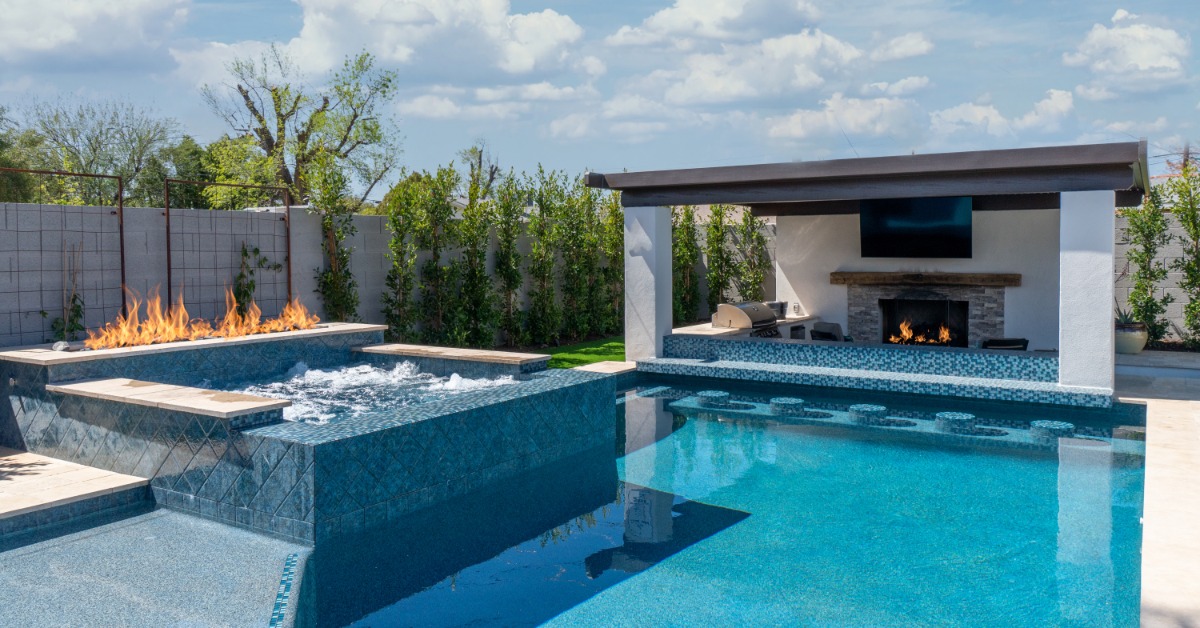
A raised spa introduces vertical interest to an otherwise horizontal pool design. The difference in elevation creates a noticeable architectural feature that draws attention without disrupting the geometric layout. Homeowners can position the spa along one pool edge or incorporate it into a corner.
The spa’s exterior finish provides another opportunity for customization. Contrasting tile or natural stone can distinguish the raised structure from the surrounding pool deck. A matching finish creates a more unified appearance.
Some raised spas feature spillways that allow water to flow into the swimming pool below. This movement adds a dynamic element while emphasizing the spa’s elevated position.
Tanning Ledges Introduce Layered Pool Designs
Tanning ledges create a shallow area within the pool where swimmers can relax while remaining partially submerged. Their broad, flat surfaces introduce another visible plane that adds depth to geometric designs.
Homeowners often position tanning ledges near the pool entrance to create a gradual transition into deeper water. This arrangement establishes a clear distinction between lounging and swimming areas.
A rectangular ledge follows the straight lines of the main structure, maintaining a consistent design. Different swimming pool shapes offer unique opportunities to incorporate tanning ledges that complement the pool’s geometry. Thoughtful ledge placement highlights the pool’s proportions while creating a comfortable relaxation area.
Water Features Bring Movement to Clean Lines
Geometric swimming pools emphasize still surfaces and structured edges. Water features introduce movement that contrasts with these orderly design elements.
Sheer descents create smooth sheets of water that flow from narrow openings into the pool. Their uniform appearance complements contemporary geometric designs while adding visual energy.
Deck jets provide another option for creating movement. These features send controlled streams of water from the surrounding deck into the swimming pool, forming graceful arcs above the surface. A water feature along a prominent wall becomes a central design element, while smaller accents create subtle points of interest.
Contrasting Tile Patterns Highlight Pool Details
Tile selection gives homeowners control over the visual character of a geometric swimming pool. Different colors and patterns can emphasize architectural features without changing the pool’s fundamental shape.
A contrasting waterline tile creates a defined border around the swimming pool. Darker tones establish a dramatic outline, while lighter selections contribute to a softer appearance. Mosaic tiles offer opportunities for decorative accents. Homeowners can even incorporate geometric patterns along steps or raised spa walls to introduce additional detail.
Tile size also affects the finished appearance. Larger tiles create broader visual surfaces, while smaller pieces allow intricate patterns and precise transitions. Coordinating tile selections with surrounding materials maintains a balanced appearance while preserving the clean lines that make geometric pools appealing.
Perimeter-Overflow Edges Create a Seamless Appearance
Perimeter-overflow designs introduce a distinctive architectural effect by allowing water to flow over designated pool edges into a concealed collection system. This arrangement creates the appearance of a continuous water surface.
The visual effect works particularly well with geometric pools because straight edges emphasize precision. Water appears to meet the surrounding deck with minimal interruption, producing a sleek finish.
A perimeter-overflow design requires careful planning and specialized construction. Homeowners should discuss site conditions and equipment requirements with an experienced pool builder before selecting this feature.
Pool Lighting Accentuates Geometric Features After Dark
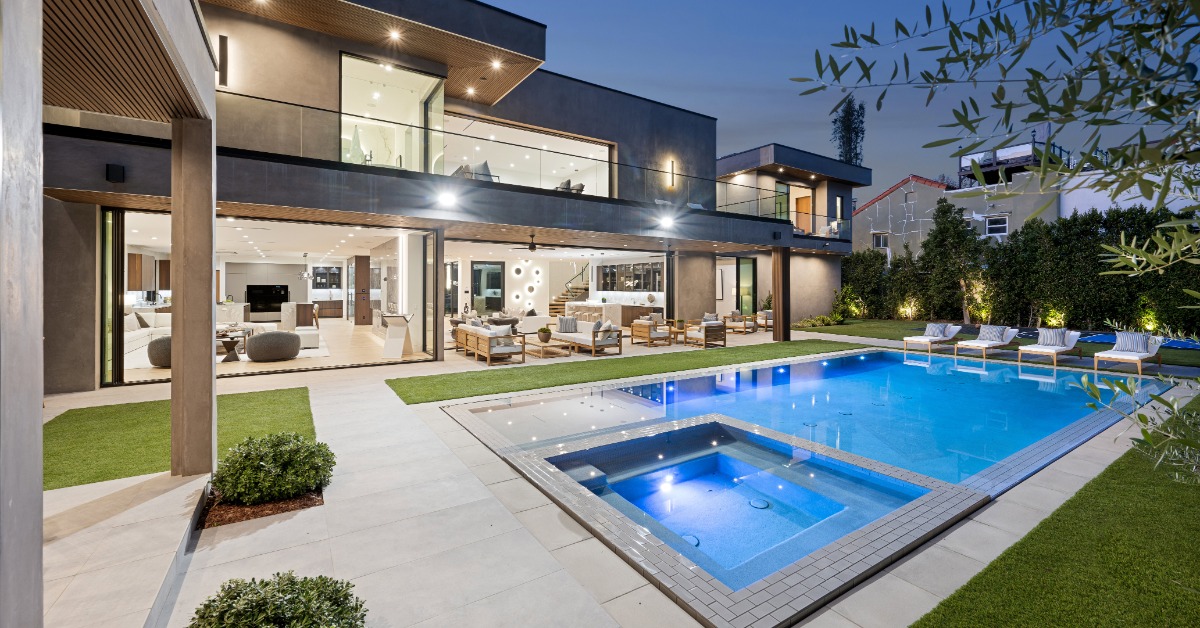
Lighting changes how homeowners experience their swimming pool after sunset. Strategically positioned fixtures emphasize architectural details that might otherwise disappear in low-light conditions.
Underwater LED lighting illuminates the pool’s interior and highlights the relationship between its walls and floor. The effect can make straight edges appear more pronounced. Lighting also creates opportunities to emphasize individual features. Illuminated steps establish visual depth, while carefully positioned fixtures draw attention to a raised spa.
Homeowners should consider brightness and placement when planning their lighting design. Excessive illumination can overpower subtle architectural details, while thoughtful positioning creates an inviting atmosphere.
Deck Materials Frame the Pool With Distinctive Texture
The surrounding deck provides a visual frame that influences how homeowners perceive the swimming pool. Material selection reinforces geometric lines while introducing texture that contrasts with the water’s smooth surface.
Large-format pavers complement rectangular pools by repeating their structured appearance. Natural stone introduces subtle variations that soften the surrounding architecture. Decking patterns can also influence visual movement. Pavers that run parallel to the pool’s longest edge emphasize its length, while perpendicular arrangements create a different sense of proportion.
Color coordination deserves equal attention. Lighter decking brightens the surrounding space, while darker materials create stronger contrast against the water. Homeowners should also consider surface comfort and slip resistance when selecting materials for everyday use.
Custom Geometric Designs Bring Backyard Features Together
The most successful geometric swimming pools combine individual design elements into a unified outdoor environment. Each feature should complement the pool’s proportions and surrounding architecture. Exploring geometric pool features that add visual interest gives homeowners opportunities to personalize their outdoor spaces while maintaining a sophisticated appearance. Careful material selection and balanced feature placement create a design that feels intentional.
At Pulliam Pools, we specialize in custom swimming pool design and construction. Our team works with homeowners to develop pool designs that complement their properties and reflect their preferences.
Whether you envision a sleek rectangular pool or a custom geometric design with distinctive features, we’re ready to discuss your ideas. Contact Pulliam Pools today to explore your options and begin planning a backyard that combines architectural beauty with everyday enjoyment.